Scientometric indicators are important data that help assess the effectiveness and authority of a particular journal in the scientific environment. There are several key metrics that researchers pay attention to when publishing their studies. We will examine each of them in detail in our article.
What are scientometric indicators?
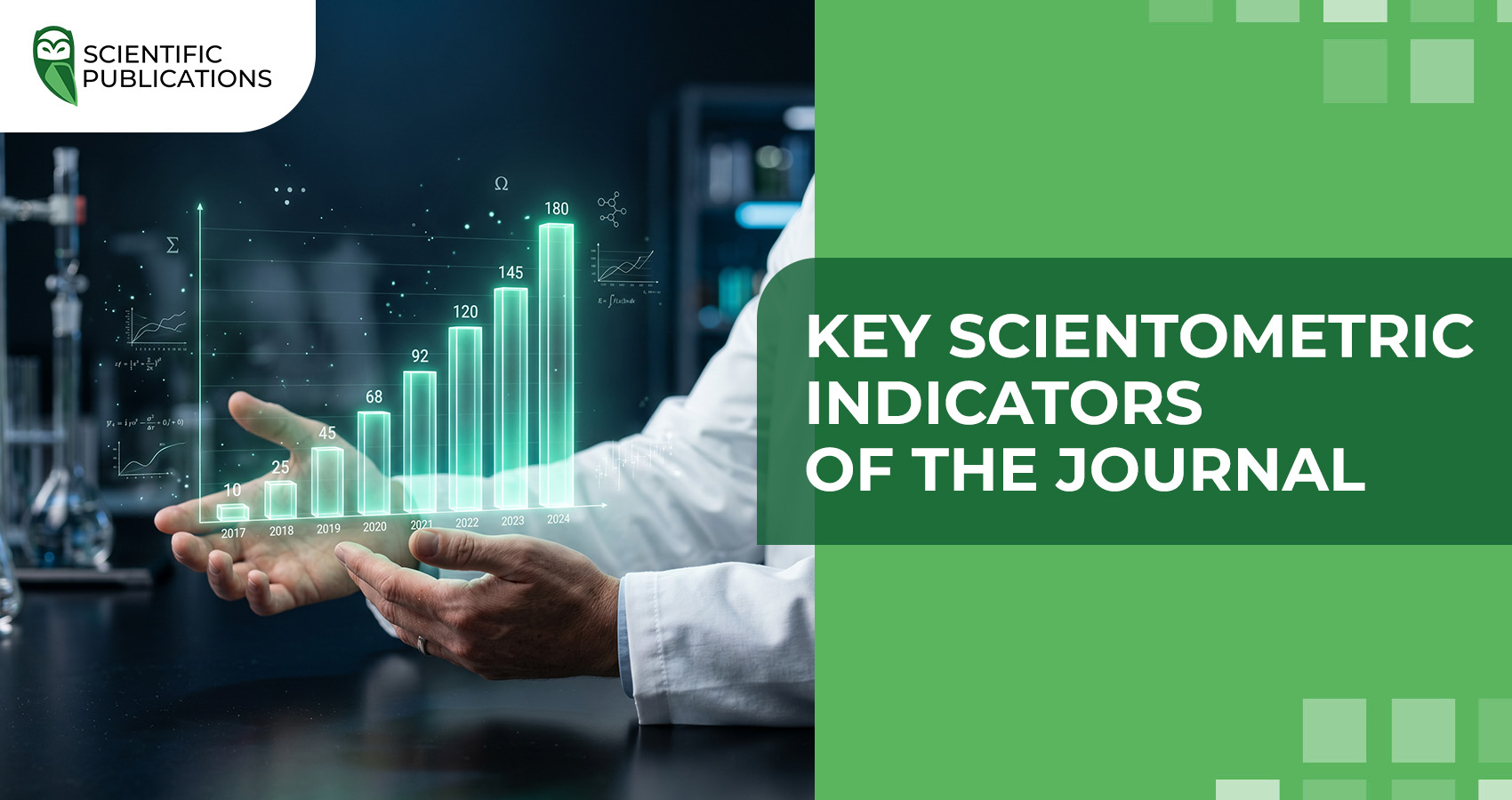
Scientometric indicators are digital metrics that are based on statistical data and reflect the level of authority of a particular scientific journal. These data may depend on the number of citations, the authority of citation sources, the subject area, and so on. That is, the more actively the publication’s materials are cited and the more significant these mentions are, the higher some of its individual indicators may be.
Types of scientometric indicators of journals
Scientometric indicators differ depending on the database in which the journal is indexed. At the same time, there are basic metrics that are used on different platforms:
- Quartile (Q) – an indicator that divides journals into four categories according to their position in the ranking of a particular scientific field. You can learn more about the distribution of quartiles (Q1, Q2, Q3, Q4) from our previous article.
- Percentile – a metric that demonstrates the relative position of a journal in its subject area. A scale from 1 to 99% is used.
It is worth considering that the algorithms for calculating quartiles and percentiles differ across different databases. Therefore, if a journal is indexed simultaneously in several systems (Scopus and Web of Science), it will have separate indicators for each of them.
Indicators of the Web of Science (WoS) database:
- Journal Impact Factor – one of the key metrics in Web of Science. It is calculated by the ratio of the number of citations to the number of cited publications over two years. A five-year or ten-year period may also be taken into account.
- Journal Citation Indicator – this is a metric that reflects the average normalised citation impact of journal articles, taking into account field-specific characteristics.
Indicators of the Scopus database:
- CiteScore – the distinctive feature of this indicator is the calculation of the average number of citations for publications over four years.
- SJR – an indicator that is more complex in its calculation method than others, as it takes into account not only the number of citations but also the authority of the journals from which they come. This means that a citation in a publication with a higher ranking will be valued higher than a citation in a little-known publication.
- SNIP – the calculation takes into account the average number of citations of journal articles over the last three years, as well as the specific features of citation in its scientific field. This indicator makes it possible to objectively assess and compare publications from different fields.
Why are a journal’s scientometric indicators important for researchers?
Researchers pay significant attention to analysing journal indicators during their scientific activity. Among the main processes influenced by digital metrics, the following can be highlighted:
- Choosing a journal for publication. High scientometric indicators are usually one of the main criteria that researchers use when choosing a suitable publication for publishing their article.
- Protection from low-quality publications. Strong positions of a journal in the Scopus and WoS databases may demonstrate its authority, the quality of published works and the peer review conducted.
- Growth of one’s own metrics. A high journal ranking may provide a researcher with such advantages as reaching a larger number of readers and the opportunity to achieve a higher level of citation.
Scientometric indicators, regardless of their type, can influence the ranking of a publication in the academic community. Such digital metrics help track the dynamics of a journal’s development, assess the quality of its publications and determine its level of authority.
Have you encountered difficulties with choosing a journal in the Scopus or Web of Science databases? Contact Scientific Publications. Our specialists will audit your work and accompany you at every stage of publication. Fill in the form below, and our manager will contact you shortly. Together towards new achievements!