The Hirsch index is one of the key indicators for an author. This metric may be taken into account during certification, competitive selection, the assessment of grant applications, or academic promotion. In our article, we will examine what influences a scientist’s h-index and how it can be increased.
What influences a scientist’s h-index?
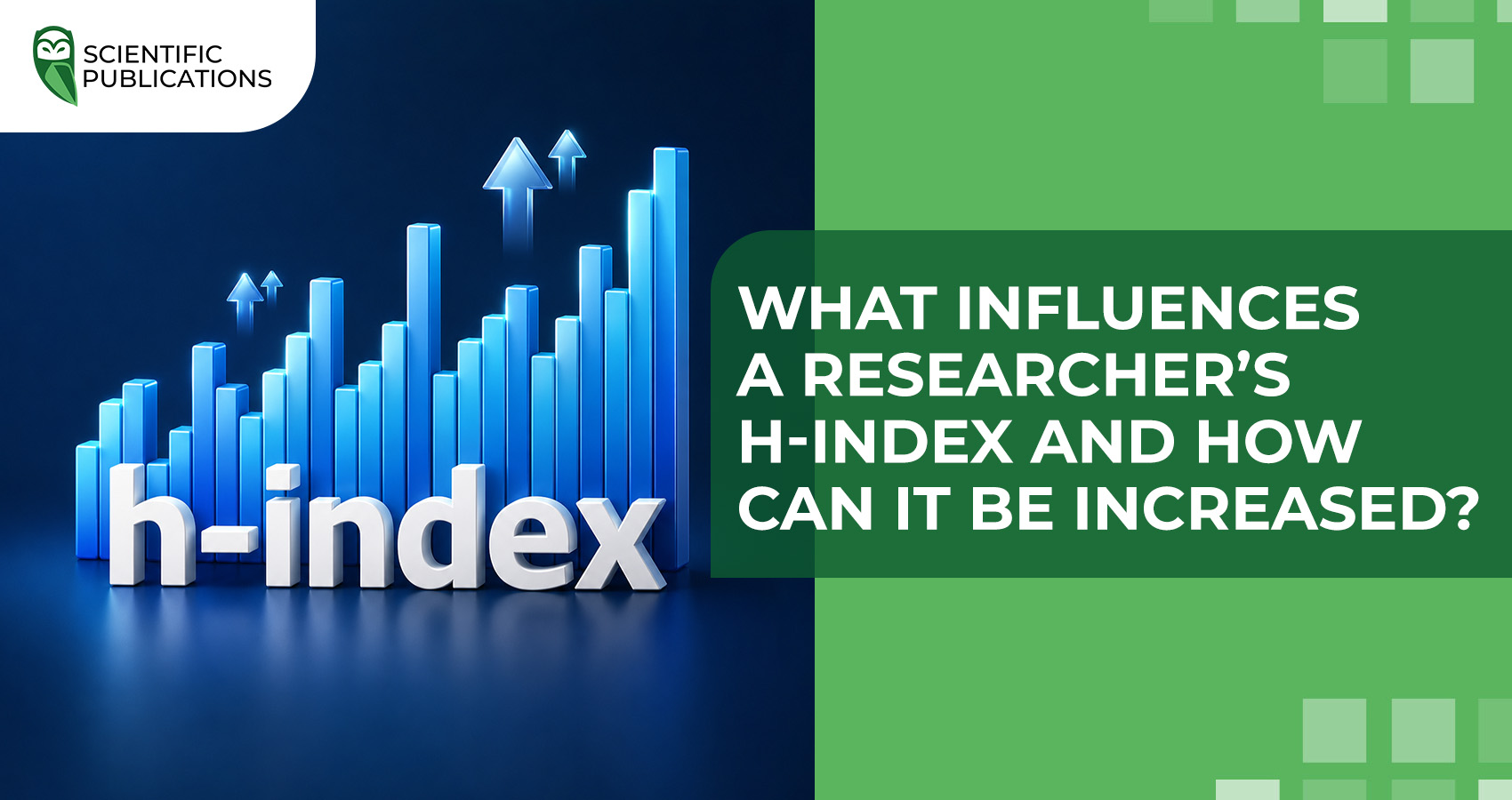
The Hirsch index is formed on the basis of the number of publications and their citation level. To determine an author’s h-index, it is necessary to arrange their articles from the most cited to the least cited.
To calculate the indicator, the number of citations received by a publication must be equal to or greater than its position in the list. For example, if a scientist’s h-index is ten, this means that their professional body of work includes at least ten articles, each of which has been cited no fewer than ten times.
A number of factors influence the formation of an author’s Hirsch index, including:
- the quality and relevance of research
- the scientific field
- the length of the researcher’s scientific career
- the database in which the indicator is calculated
- the accessibility of publications
- co-authorship and international collaboration
It should be noted that, in order to have a high Hirsch index, it is not enough for a scientist to have one article with a significant number of citations. For the h-index to increase, several of the author’s publications must reach the corresponding citation level.
How can the h-index be increased?
1. Choose relevant research topics
To increase their h-index, an author should choose research topics that reflect current issues in the relevant field. Otherwise, the article may fail to attract the audience’s attention and risks remaining unnoticed.
The article itself should explain why a particular issue requires consideration, analyse data from previous works, and present new results, conclusions, or recommendations.
2. Choose a journal for publication carefully
The choice of journal is important for the subsequent visibility of the work. Publication in a journal with strong metrics that is indexed in international databases provides access to a significantly wider readership than publication in a little-known journal. This increases the chances of the article being cited and, as a result, helps the author increase their Hirsch index.
When choosing a journal, attention should also be paid to its scope, which must correspond to the research topic. In addition, before submitting an article to a journal, the author should check the following aspects:
- the types of materials published by the journal
- the requirements for the structure, formatting, and length of the article
- the language of publication
- the access model
- the presence of a publication fee
- the features of the peer-review process
- the journal’s current indexing status in the required database
3. Use keywords
Correctly selected keywords help databases classify an article accurately by subject area and also increase its visibility in search results for relevant queries. Thus, the overall visibility of the research and the likelihood of its subsequent citation may improve.
Keywords should reflect the content of the research and correspond to the terminology of a particular scientific field. It is advisable to use them in the title and abstract.
4. Publish in co-authorship
Collaboration and participation in projects can help increase the Hirsch index. Since each researcher has their own audience, a co-authored publication can achieve wider reach. Thus, joint work may potentially receive a greater number of citations.
5. Share research on professional platforms
After a scientific paper has been published, it is necessary to check whether it appears in the author’s personal profiles, for example, in Scopus, Web of Science, or Google Scholar. This is an important stage for correctly linking works to the author and increasing the visibility of these materials. It may also be useful to share information about the research on professional resources such as ResearchGate, Academia.edu, and LinkedIn.
Many scientists seek to achieve a high h-index. In attempting to increase this indicator, authors often make serious mistakes. In particular, these include excessive self-citation, the addition of irrelevant references, the publication of almost identical articles, and so on. Such actions should be avoided, as they may damage the author’s scientific reputation and raise doubts about compliance with academic integrity.
Having difficulties increasing your Hirsch index? Contact Scientific Publications. Our specialists will analyse your profile and prepare an individual strategy for increasing citations. To receive a free consultation, submit a request on the website, and our manager will contact you shortly. Together towards new scientific achievements!