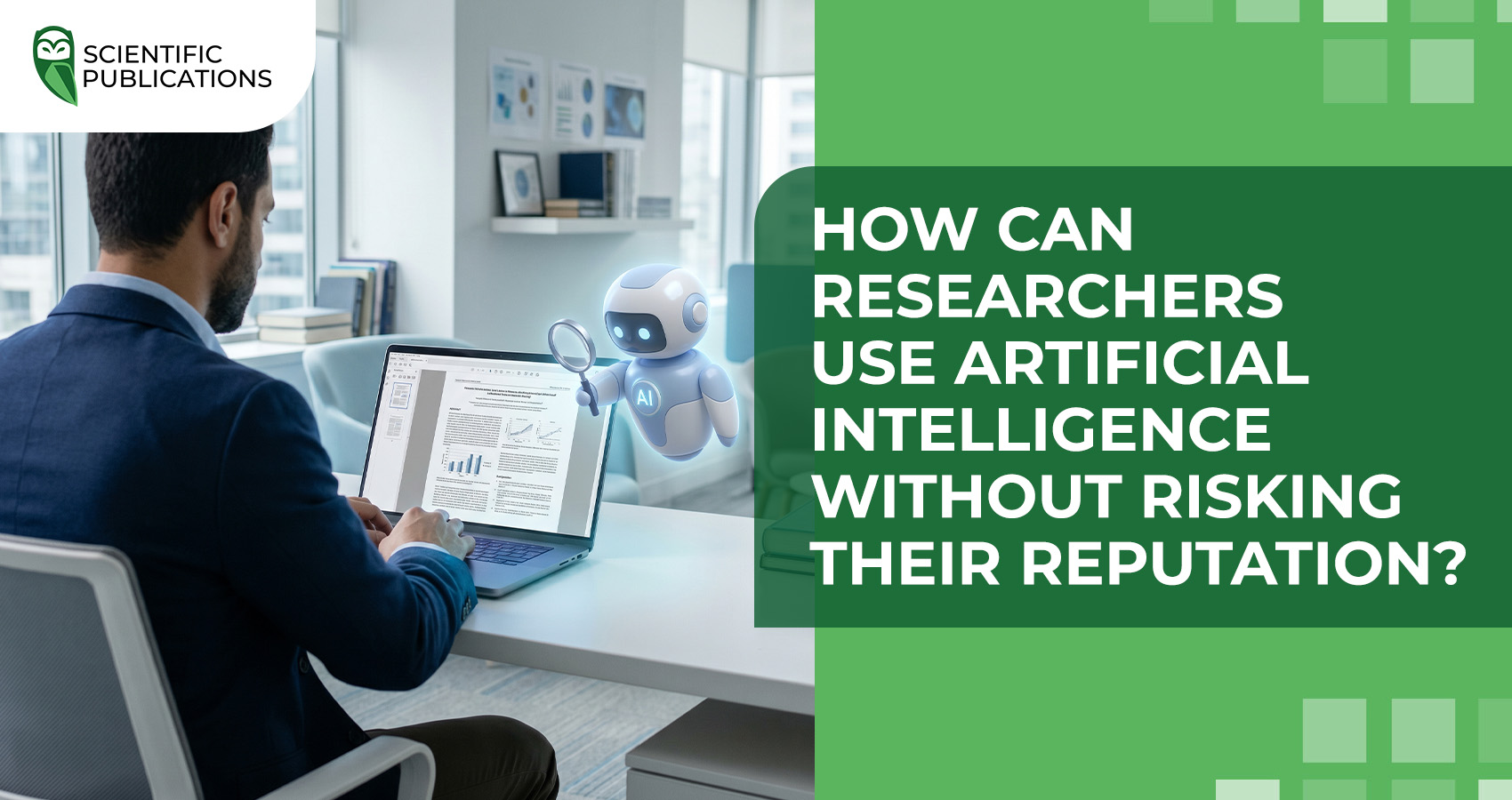
In the world of modern technologies, the topic of using artificial intelligence is quite relevant for scientists. Therefore, an important question arises: how can AI tools be used without violating the principles of academic integrity and without reputational losses? We explain this in detail in our article.
Advantages of AI tools in scientific activity
When using artificial intelligence in their activities, scientists should remember that it is only an auxiliary tool, not a full replacement for the author. AI tools help optimise individual processes in a researcher’s work. In particular, they have the following advantages:
- Generating ideas. AI can help an author find relevant research topics, form a preliminary article plan and clarify certain questions. However, the researcher must ensure that artificial intelligence does not independently formulate scientific conclusions, invent sources or replace the author’s critical thinking.
- Fast search and systematisation of scientific information. Artificial intelligence can help a scientist cope with a large amount of information. It will be especially useful at the stage of forming the theoretical basis of an article. Thanks to AI tools, an author can find relevant sources more quickly, group materials by topic, identify key ideas, compare the approaches of different authors and detect gaps in research.
- Improving the text of a scientific article. With the help of artificial intelligence technologies, a researcher can make their work better. AI can identify grammatical, punctuation and spelling errors, as well as improve the scientific style. However, it is important that the author independently checks, edits and controls the final content of the manuscript.
- Text translation. To increase the international visibility of scientific publications, it is important for a researcher to prepare their work in English. AI tools can help with academic translation. However, one should not rely only on modern technologies. To ensure the quality and literacy of the text, it should be submitted for review by professionals. Therefore, we suggest that you familiarise yourself with our “Academic Translation” service.
How can artificial intelligence be used without risk to reputation?
If a scientist uses AI tools in their activities, they must not violate the principles of academic integrity. Therefore, we recommend following these recommendations:
- Do not indicate AI as an author or co-author. Artificial intelligence tools are not capable of taking responsibility for the accuracy, integrity and originality of the work and cannot approve the final version of the manuscript.
- Declare the use of AI. If technologies based on artificial intelligence have influenced the content of the work, this must be stated in the manuscript. Concealing their use may negatively affect the publication process. It may also be regarded as dishonest behaviour.
- Check all facts, sources and references. One should not completely trust artificial intelligence. It is better to check all the information received, as it may be unreliable or invented.
- Familiarise yourself with the editorial policy of the specific journal. Before submitting a scientific article, it is necessary to find out the requirements of the specific publication regarding the use of AI. They may differ significantly depending on the journal or publisher.
- Control the content of the final version of the manuscript. Despite the assistance of AI, the author must maintain critical thinking and reflect their own ideas, analysis, interpretation and conclusions.
Artificial intelligence tools have many advantages and useful capabilities that can help when preparing scientific publications. However, it should be remembered that only the author is responsible for the information provided, so it must be carefully checked.
Need help with publishing a scientific article? Contact the company Scientific Publications. Our specialists are ready to provide professional support and accompany you in the publication process. To receive a free consultation, fill in the form below, and our manager will contact you shortly. Together towards successful publications!